






The Fascinating World of Biology: Understanding Life at Every Level
Biology is the science of life, and it plays a vital role in helping us understand the world around us. From the smallest microorganisms to complex human systems and vast ecosystems, biology explains how living things function, grow, adapt, and interact. It is not just a subject studied in classrooms; it is a field that influences medicine, agriculture, environmental protection, and even technology. By exploring biology, we gain insights into life itself and our responsibility toward the planet.
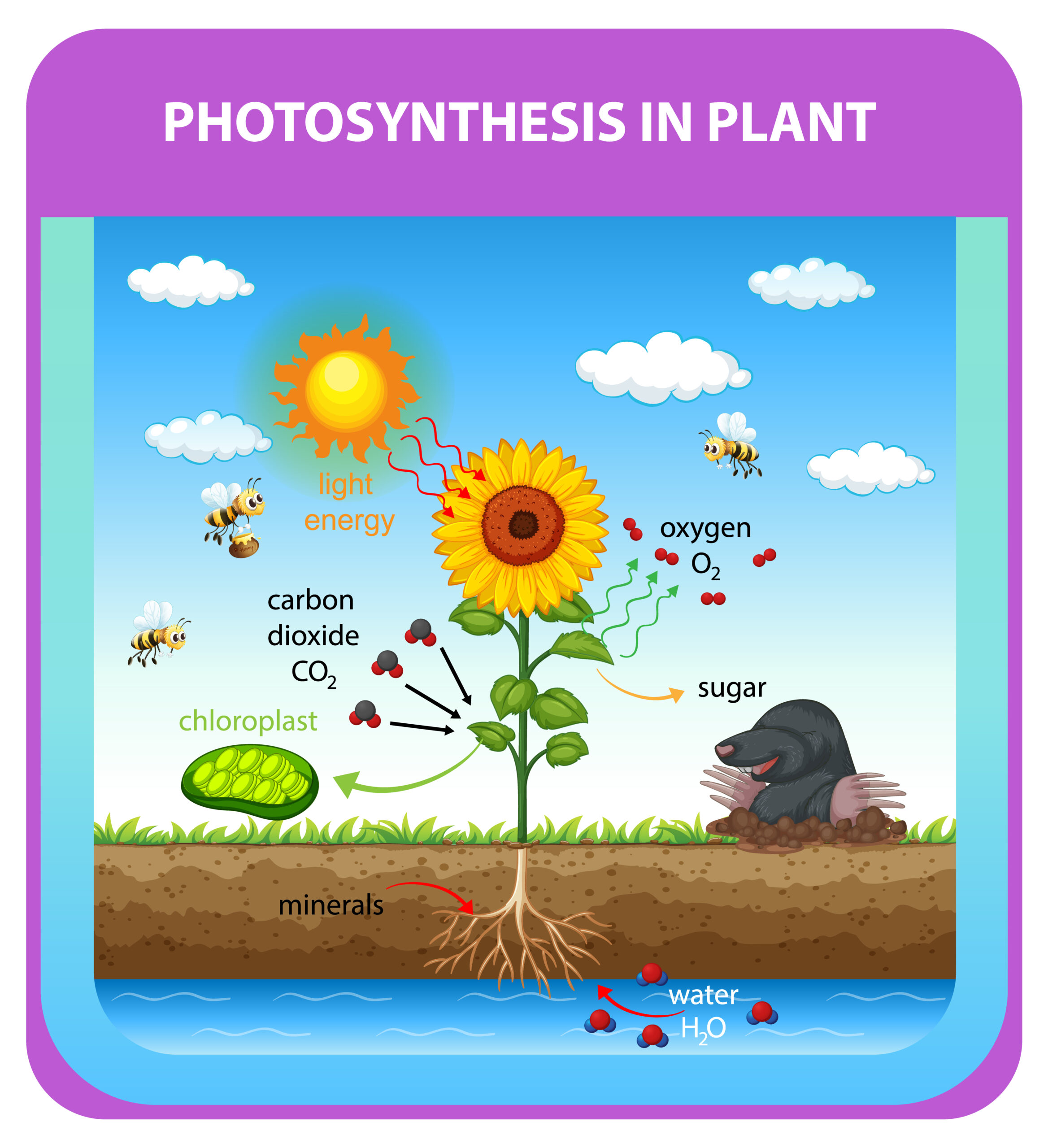
Process of photosynthesis in plant illustration
At its core, biology is about understanding living organisms and their processes. It begins at the cellular level, where life’s basic units perform essential functions such as respiration, reproduction, and energy production. Cells may be microscopic, but they are incredibly complex. Each cell contains genetic material that determines traits, guides growth, and ensures survival. This genetic code, DNA, is one of biology’s most remarkable discoveries, as it connects all living beings through a shared molecular language.
Moving beyond cells, biology studies organs and systems that work together to sustain life. In humans, systems like the circulatory, respiratory, and nervous systems cooperate to maintain balance, known as homeostasis. When this balance is disturbed, diseases can occur. This is why biology is closely linked to medicine. Advances in biological research have led to life-saving treatments, vaccines, and a better understanding of health and disease. Fields such as genetics, microbiology, and biotechnology continue to revolutionize healthcare and improve quality of life.
Biology also extends to the study of plants and animals, revealing how they adapt to their environments. Plants, through photosynthesis, form the foundation of life by producing oxygen and food. Animals, in turn, depend on plants and other organisms for survival. These relationships are studied in ecology, a branch of biology that focuses on ecosystems and the balance of nature. Understanding ecological interactions helps scientists address major global challenges such as climate change, habitat loss, and biodiversity decline.
Biology is the science of life, and it plays a vital role in helping us understand the world around us. From the smallest microorganisms to complex human systems and vast ecosystems, biology explains how living things function, grow, adapt, and interact. It is not just a subject studied in classrooms; it is a field that influences medicine, agriculture, environmental protection, and even technology. By exploring biology, we gain insights into life itself and our responsibility toward the planet.
At its core, biology is about understanding living organisms and their processes. It begins at the cellular level, where life’s basic units perform essential functions such as respiration, reproduction, and energy production. Cells may be microscopic, but they are incredibly complex. Each cell contains genetic material that determines traits, guides growth, and ensures survival. This genetic code, DNA, is one of biology’s most remarkable discoveries, as it connects all living beings through a shared molecular language.
Moving beyond cells, biology studies organs and systems that work together to sustain life. In humans, systems like the circulatory, respiratory, and nervous systems cooperate to maintain balance, known as homeostasis. When this balance is disturbed, diseases can occur. This is why biology is closely linked to medicine. Advances in biological research have led to life-saving treatments, vaccines, and a better understanding of health and disease. Fields such as genetics, microbiology, and biotechnology continue to revolutionize healthcare and improve quality of life.
https://www.tiktok.com/@bollywoodsongs009/video/7593416406889254175?is_from_webapp=1&sender_device=pc
Biology also extends to the study of plants and animals, revealing how they adapt to their environments. Plants, through photosynthesis, form the foundation of life by producing oxygen and food. Animals, in turn, depend on plants and other organisms for survival. These relationships are studied in ecology, a branch of biology that focuses on ecosystems and the balance of nature. Understanding ecological interactions helps scientists address major global challenges such as climate change, habitat loss, and biodiversity decline.
Another fascinating aspect of biology is evolution. The theory of evolution explains how species change over time through natural selection. It helps us understand the diversity of life on Earth and how organisms develop traits that enhance survival. Evolutionary biology not only answers questions about the past but also helps predict how organisms may respond to future environmental changes.
In today’s world, biology is more important than ever. Issues like pandemics, food security, and environmental sustainability require strong biological knowledge. Students who study biology develop critical thinking skills and a deeper appreciation for life. Whether one becomes a doctor, researcher, teacher, or environmentalist, biology provides a strong foundation for many careers.
In conclusion, biology is a fascinating and essential science that connects all forms of life. It helps us understand ourselves, other living organisms, and the environment we share. By learning biology, we gain knowledge that e
Another fascinating aspect of biology is evolution. The theory of evolution explains how species change over time through natural selection. It helps us understand the diversity of life on Earth and how organisms develop traits that enhance survival. Evolutionary biology not only answers questions about the past but also helps predict how organisms may respond to future environmental changes.
In today’s world, biology is more important than ever. Issues like pandemics, food security, and environmental sustainability require strong biological knowledge. Students who study biology develop critical thinking skills and a deeper appreciation for life. Whether one becomes a doctor, researcher, teacher, or environmentalist, biology provides a strong foundation for many careers.
In conclusion, biology is a fascinating and essential science that connects all forms of life. It helps us understand ourselves, other living organisms, and the environment we share. By learning biology, we gain knowledge that e